CI/CD Pipelines for Startups: Ship Faster Without Breaking Things
For startups, speed of deployment is a competitive advantage. The ability to ship features, fix bugs, and iterate on user feedback multiple times per day separates winners from the rest. A solid CI/CD pipeline is what makes this possible.
Why CI/CD Matters for Startups
Continuous Integration and Continuous Deployment isn't just for enterprise teams with dedicated DevOps engineers. For a 3-person startup, CI/CD is even more critical — you don't have the luxury of a QA team or a separate release management process. Your pipeline IS your QA and release process.
The goal is simple: every code change should be testable, reviewable, and deployable within minutes. No manual steps, no "works on my machine" issues, no 2-hour release cycles. When your pipeline is this fast, you can afford to ship small changes frequently instead of batching risky big releases.
Setting Up GitHub Actions
GitHub Actions is the natural choice for most startups already on GitHub. A basic pipeline runs on every pull request: install dependencies, run linting, execute tests, and build the project. If everything passes, the PR can be merged with confidence.
Here's a minimal but effective GitHub Actions config for a Next.js project: run TypeScript type checking, ESLint, unit tests (if you have them), and a production build. The entire pipeline should take under 3 minutes. If it takes longer, investigate parallelization or caching strategies.
Add branch protection rules: require the CI pipeline to pass before merging, require at least one review (even from a co-founder), and prevent force-pushes to main. These guardrails catch 90% of production issues before they reach users.
Automated Deployment with Vercel
Vercel (or Netlify) handles the deployment side. Every push to main triggers an automatic deployment with preview URLs for every branch. This means designers, product managers, and stakeholders can review changes before they go live — no staging server required.
Preview deployments are the secret weapon. Every pull request gets its own URL with the latest changes. Share it with your team, test it on mobile, show it to stakeholders — all before merging. This eliminates the "it looked different on staging" problem entirely.
Testing Strategy for Small Teams
Testing doesn't have to be comprehensive from day one. Start with unit tests for critical business logic, integration tests for API endpoints, and a smoke test that verifies the core user flow works end-to-end. Expand coverage as the codebase grows.
The 80/20 rule applies: 20% of your tests will catch 80% of bugs. Focus on tests for your payment flow, authentication, and core business logic. Skip testing CSS, layout, and edge cases that won't impact revenue. You can add comprehensive testing later when you have the resources.
The Complete Pipeline
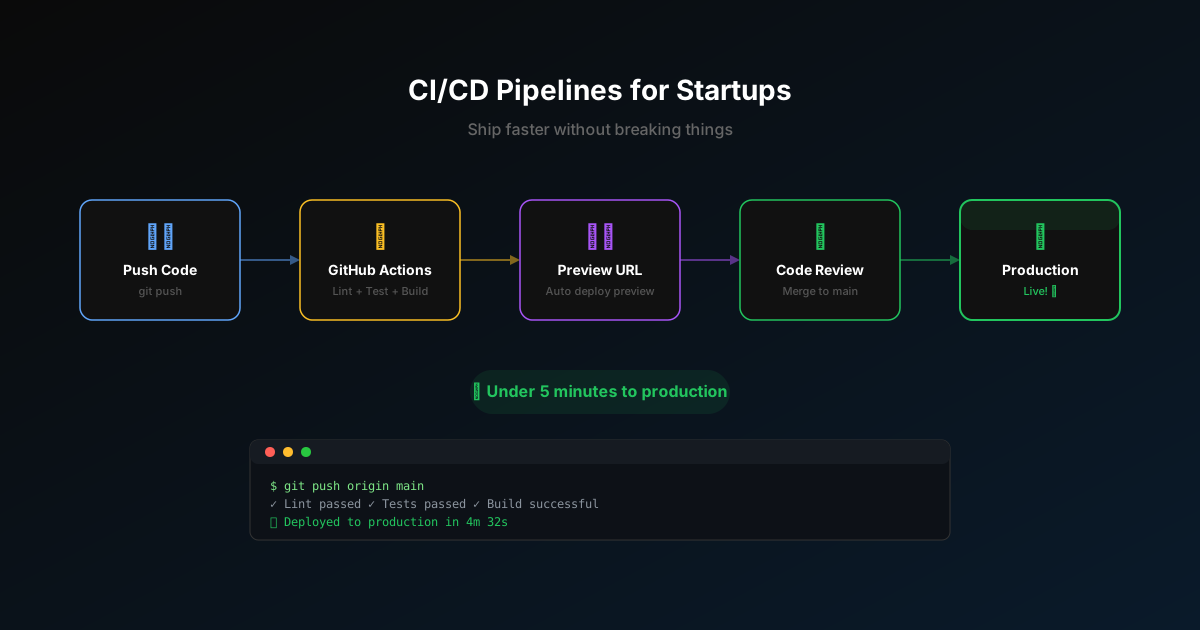
The full pipeline for a typical Next.js startup looks like: push to branch → GitHub Actions runs lint + test + build → Vercel creates preview deployment → team reviews → merge to main → automatic production deployment. Total time from code change to production: under 5 minutes.
This pipeline scales from a solo founder to a 20-person engineering team without changes. The same tools, the same process, the same speed. That's the beauty of investing in CI/CD early — it grows with you.
Related Articles
Why Custom Websites Outperform Templates for Growing Businesses
Template sites limit your brand and SEO potential. Discover why custom-built websites with Next.js and headless CMS deliver 3× faster load times and higher conversion rates.
Mobile AppsCross-Platform Mobile Apps in 2026: React Native vs Flutter
Choosing the right framework for your mobile application. We break down performance, developer experience, and time-to-market for both stacks.
CRMBuilding a Custom CRM That Your Team Will Actually Use
Off-the-shelf CRMs force your workflow into someone else's mold. Learn how a tailored CRM with AI automation can cut admin time by 40%.
Have a project in mind? Let's talk.
Get a Quote