Headless CMS vs Traditional CMS: Which Is Right for Your Project?
The headless CMS market has matured significantly. What was once a niche choice for developer-heavy teams is now a mainstream option for content-driven websites. But is it always the right choice? Let's break down the trade-offs for different project sizes and team compositions.
What Is a Headless CMS?
A headless CMS separates the content management backend from the frontend presentation layer. This means you can deliver content to a website, mobile app, smart watch, or any other channel through APIs. The flexibility is powerful, but it comes with trade-offs.
Think of it like this: a traditional CMS (like WordPress) is a restaurant that serves you a complete meal. A headless CMS is a kitchen that gives you ingredients and lets you cook whatever you want. More flexibility, but you need to know how to cook.
Contentful: The Enterprise Standard
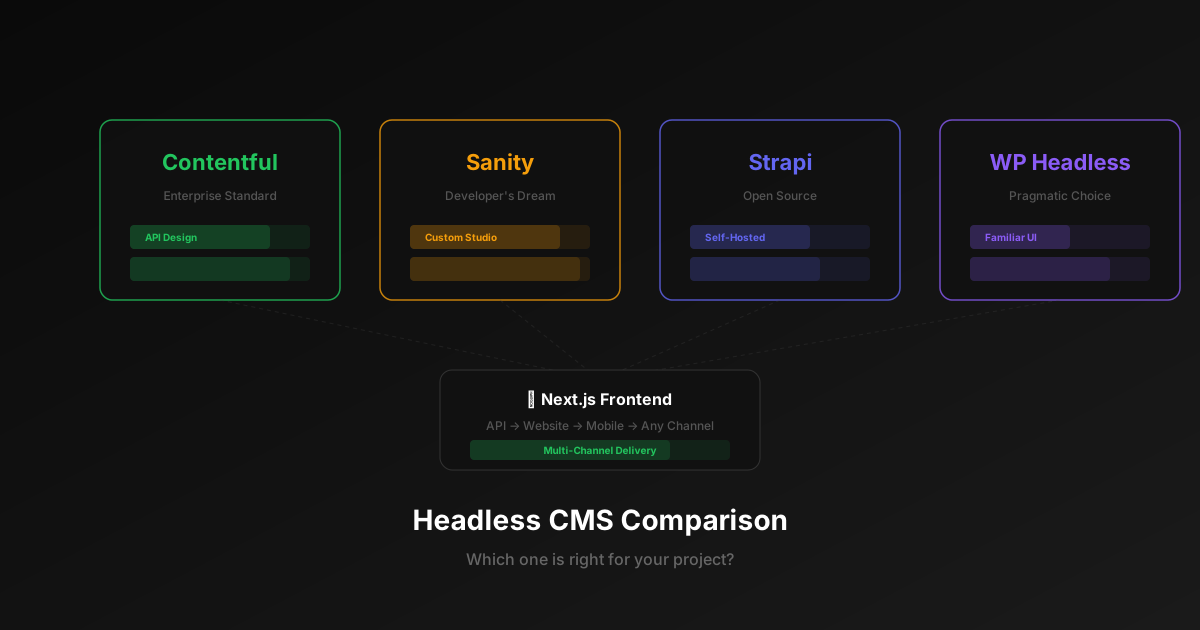
Contentful leads the market with excellent API design, rich text editing, and a scalable infrastructure. It's ideal for enterprise teams that need multi-channel content delivery and have the development resources to build custom frontends.
Contentful's content modeling is its strongest feature. You can define complex content types with references, localized fields, and validation rules. The API is well-documented, and the CDN-backed delivery ensures fast content loading worldwide. Pricing starts at free for small projects but scales to $300+/month for production use.
Sanity: Developer's Dream
Sanity takes a developer-first approach with its real-time collaboration backend and customizable editing studio. The GROQ query language is powerful, and the Sanity Studio can be extended with custom input components. Best for teams that want full control over the editing experience.
Sanity's killer feature is the customizable Studio. You can build entirely custom editing interfaces using React components. Need a color picker that validates against your brand palette? A preview that shows how content will look on the actual website? Sanity makes this straightforward. The free tier is generous — 100k API requests/month.
Strapi: The Open-Source Option
Strapi is the open-source option. Self-hosted or cloud-based, it gives you full ownership of your content infrastructure. The admin panel is customizable, and the plugin ecosystem covers most common needs. Great for teams that want to avoid vendor lock-in.
Strapi v5 has significantly improved the developer experience with better TypeScript support, a redesigned admin panel, and improved performance. Self-hosting gives you complete control over data, but means you're responsible for scaling, backups, and security patches.
WordPress Headless: The Pragmatic Choice
WordPress headless (using WP as a backend with a Next.js frontend) is a pragmatic choice for teams that already have WordPress content and editors who know the WordPress admin. It combines familiar content management with modern frontend performance.
The WordPress REST API or WPGraphQL plugin exposes your content as structured data that a Next.js frontend can consume. Editors keep using the WordPress admin they know, while the frontend delivers blazing fast performance. The trade-off is maintaining two systems and the complexity of the WordPress backend.
Making the Right Choice
For most startups and small businesses, Sanity offers the best balance of developer experience, editor experience, and cost. For enterprises with complex content models and multi-channel delivery needs, Contentful is the proven choice. For teams that already have WordPress, going headless is a solid middle ground. And for teams that want full control and have DevOps capacity, Strapi self-hosted gives you complete ownership.
Related Articles
Why Custom Websites Outperform Templates for Growing Businesses
Template sites limit your brand and SEO potential. Discover why custom-built websites with Next.js and headless CMS deliver 3× faster load times and higher conversion rates.
Mobile AppsCross-Platform Mobile Apps in 2026: React Native vs Flutter
Choosing the right framework for your mobile application. We break down performance, developer experience, and time-to-market for both stacks.
CRMBuilding a Custom CRM That Your Team Will Actually Use
Off-the-shelf CRMs force your workflow into someone else's mold. Learn how a tailored CRM with AI automation can cut admin time by 40%.
Have a project in mind? Let's talk.
Get a Quote