How Much Does It Cost to Build a Mobile App in 2026?
The cost of building a mobile app in 2026 varies wildly depending on complexity, platform, and who's building it. Let's break down realistic budget ranges so you can plan accurately — no fluff, no hidden surprises.
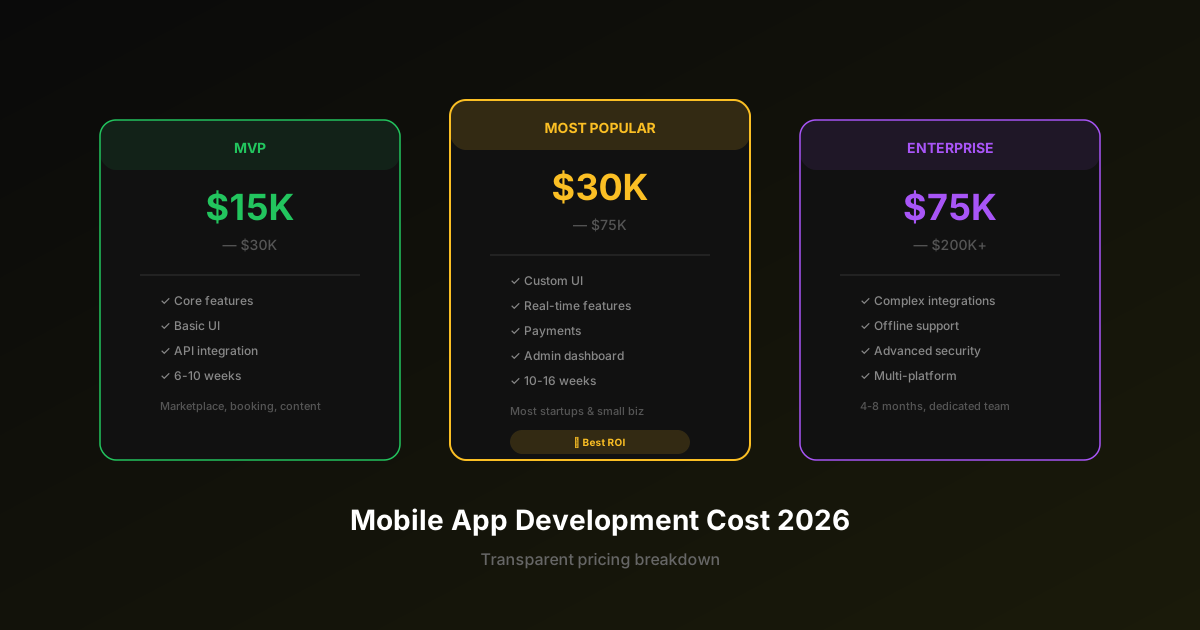
Simple MVP: $15,000–$30,000
A simple MVP — think a basic marketplace, booking app, or content platform — typically costs $15,000–$30,000 using cross-platform frameworks like React Native or Flutter. This covers core features, basic UI, and API integration. Timeline: 6–10 weeks.
What you get at this tier: user authentication, a single core feature, basic navigation, and a simple backend. What you don't get: custom animations, complex integrations, offline support, or an admin dashboard. This is enough to validate your idea with real users.
Mid-Complexity: $30,000–$75,000
A mid-complexity app with custom UI, real-time features (chat, notifications), payment integration, and an admin dashboard runs $30,000–$75,000. This is the sweet spot for most startups and small businesses launching a digital product. Timeline: 10–16 weeks.
At this tier, you're building a real product that can scale. Custom UI that matches your brand, push notifications, in-app purchases or subscription billing, user profiles, and basic analytics. This is where most successful mobile apps live.
Enterprise-Grade: $75,000–$200,000+
Enterprise-grade apps with complex integrations, offline support, advanced security, and multi-platform deployment (iOS, Android, web) can range from $75,000–$200,000+. These projects require dedicated teams and thorough QA processes. Timeline: 4–8 months.
Enterprise apps typically include: SSO/SAML authentication, role-based access control, complex data synchronization, offline-first architecture, end-to-end encryption, compliance features (HIPAA, GDPR), and integration with existing enterprise systems (Salesforce, SAP, etc.).
Hidden Costs Most People Miss
Hidden costs to budget for: App Store fees ($99/year Apple, $25 one-time Google), backend hosting ($50–500/month depending on scale), third-party API costs (maps, payments, notifications), and ongoing maintenance (typically 15–20% of initial build cost annually).
Don't forget about QA and testing. Budget at least 15–20% of your development cost for thorough testing across devices. A bug in production that crashes the app for 10% of users costs far more to fix than catching it before launch.
How to Reduce Costs
Ways to reduce costs: start with one platform, use cross-platform frameworks, leverage managed backend services (Firebase, Supabase), and focus your MVP on the single most important feature. You can always add features in version two once you've validated product-market fit.
The biggest cost saver is focus. Every feature you add doubles the testing surface, increases the maintenance burden, and extends the timeline. The most successful apps launched with a single, perfectly executed feature — not a dozen half-baked ones.
Related Articles
Cross-Platform Mobile Apps in 2026: React Native vs Flutter
Choosing the right framework for your mobile application. We break down performance, developer experience, and time-to-market for both stacks.
Web DevelopmentWhy Custom Websites Outperform Templates for Growing Businesses
Template sites limit your brand and SEO potential. Discover why custom-built websites with Next.js and headless CMS deliver 3× faster load times and higher conversion rates.
CRMBuilding a Custom CRM That Your Team Will Actually Use
Off-the-shelf CRMs force your workflow into someone else's mold. Learn how a tailored CRM with AI automation can cut admin time by 40%.
Have a project in mind? Let's talk.
Get a Quote