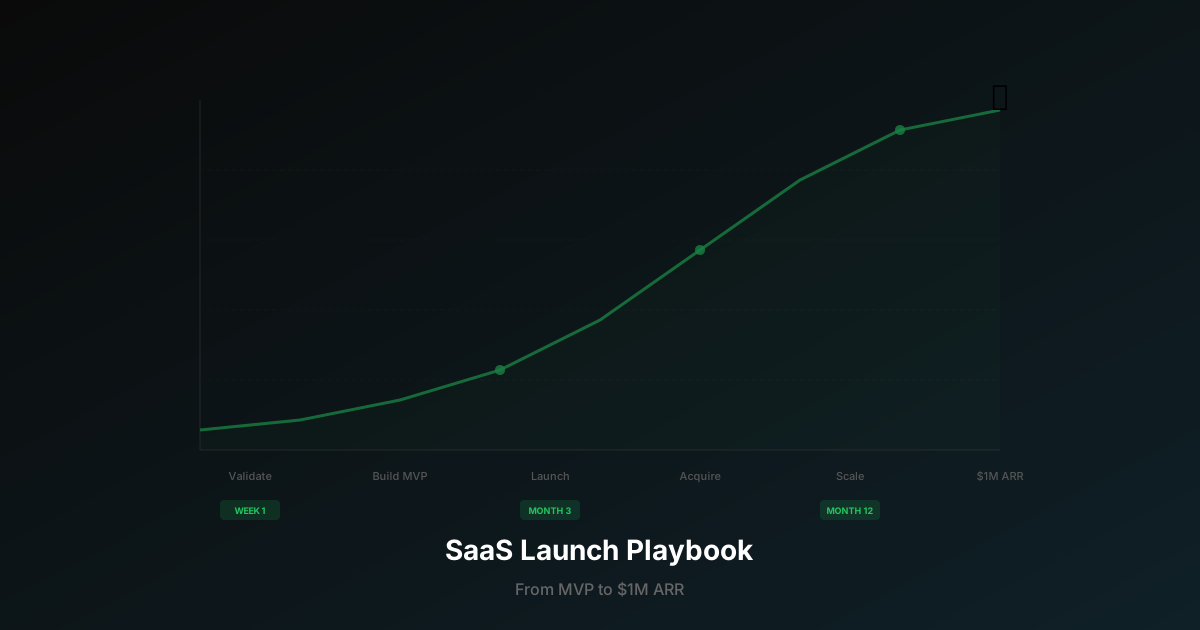
From MVP to Scale: The Complete SaaS Launch Playbook
Building a SaaS product is one of the most rewarding — and challenging — ventures in tech. The difference between SaaS companies that reach $1M ARR and those that fizzle out often comes down to execution in the first six months. This playbook covers the critical steps from idea validation to your first 100 paying customers.
Step 1: Validate Before You Build
Step one is validation. Before writing a single line of code, talk to 30+ potential customers. Understand their pain points, what they currently use, and what they'd pay for a better solution. A landing page with an email capture and a $1 pre-order button is the ultimate validation test.
The goal of validation isn't to hear "great idea!" — it's to hear people describe the exact problem you're solving in their own words. If you can't find 30 people who have this problem, your market might be too small. If they describe the problem differently than you expected, your positioning needs work.
A critical mistake founders make: building what they want instead of what the market needs. Your idea of the perfect feature set is irrelevant. What matters is whether people will pay money to solve this problem. Pre-orders, LOIs, or even signed letters of intent are the strongest validation signals.
Step 2: Build a Laser-Focused MVP
The MVP should be laser-focused on the core value proposition. Resist the urge to build every feature your potential customers mention. A SaaS MVP needs three things: authentication, the core feature, and a way to pay. Everything else can wait for version two.
The minimum in MVP means the smallest thing you can build that delivers the core value. If you're building a project management tool, your MVP isn't Gantt charts, resource allocation, and time tracking. It's a board where teams can create tasks, assign them, and track completion. That's it.
Ship your MVP in 4–6 weeks. If it takes longer, you're building too much. The purpose of an MVP is to test your assumptions with real users as fast as possible. Every week you spend building features nobody asked for is a week you could have spent learning from actual customers.
Step 3: Choose the Right Tech Stack
Tech stack decisions matter more at the SaaS stage than at any other. You need a stack that's fast to build with (Next.js + TypeScript), scales reliably (PostgreSQL + Redis), and has a clear path to enterprise features (role-based access, SSO, audit logs).
Don't overthink the tech stack. The best stack is the one your team can ship with fastest. A "wrong" tech choice that gets you to market in 4 weeks beats a "perfect" architecture that takes 4 months. You can always refactor later — you can't get back the customers you lost to a competitor who shipped first.
Step 4: Acquire Your First 100 Customers
Acquiring your first 100 customers requires a multi-channel approach: content marketing for long-term SEO, direct outreach for immediate feedback, and a referral program that turns early adopters into evangelists. The key metric isn't signups — it's activation rate.
If users aren't reaching the 'aha moment' within the first session, fix the onboarding before spending more on acquisition. The aha moment is when a user first experiences the core value of your product. For a project management tool, it might be creating their first board and adding a team member. For an analytics tool, it might be seeing their first dashboard with real data.
Content marketing is your long-term growth engine. Write blog posts answering the exact questions your potential customers are Googling. Create comparison pages ("Your product vs. Competitor"). Build free tools that demonstrate your expertise. This content compounds over time and becomes your most cost-effective acquisition channel.
Step 5: Iterate Based on Data
Once you have paying customers, let their behavior guide your roadmap. Track which features they use, where they drop off, and what they request. The features that matter most are the ones that reduce churn, not the ones that sound impressive in a pitch deck.
Weekly shipping cadence is the gold standard for early-stage SaaS. Ship one improvement per week, communicate it to users, and measure the impact. This velocity builds momentum, keeps users engaged, and gives you a massive compounding advantage over competitors who ship monthly.
Related Articles
Why Custom Websites Outperform Templates for Growing Businesses
Template sites limit your brand and SEO potential. Discover why custom-built websites with Next.js and headless CMS deliver 3× faster load times and higher conversion rates.
Mobile AppsCross-Platform Mobile Apps in 2026: React Native vs Flutter
Choosing the right framework for your mobile application. We break down performance, developer experience, and time-to-market for both stacks.
CRMBuilding a Custom CRM That Your Team Will Actually Use
Off-the-shelf CRMs force your workflow into someone else's mold. Learn how a tailored CRM with AI automation can cut admin time by 40%.
Have a project in mind? Let's talk.
Get a Quote