How Void AI Agents Are Transforming Enterprise Operations
The promise of AI in enterprise has always been about eliminating repetitive work. But most AI tools today still require significant human oversight. Void AI agents take a different approach: they're designed to operate autonomously within defined boundaries, handling complex multi-step workflows without constant supervision.
This isn't another chatbot wrapper or a simple if-this-then-that automation. Void AI agents understand context, make decisions within their permissions, and learn from outcomes to improve over time. The difference between traditional automation and AI agents is the difference between a vending machine and a personal assistant.
What Makes AI Agents Different
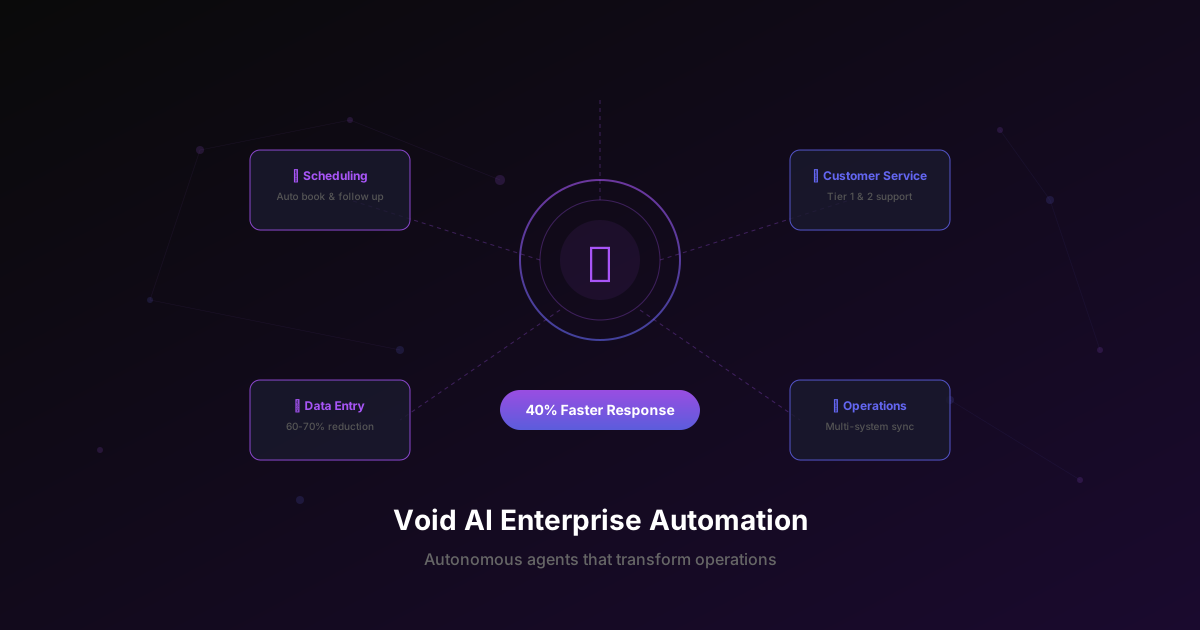
Void AI agents excel at tasks that involve decision-making across multiple systems. A scheduling agent doesn't just book meetings — it checks calendar availability across time zones, drafts agenda items based on the meeting type, sends pre-meeting materials to attendees, and follows up with action items after the call.
Traditional automation follows rigid rules: if condition A, do action B. AI agents understand intent and context. When a sales rep says "set up a follow-up with the Acme team next week," the agent knows to check the CRM for deal context, find the right stakeholders' calendars, suggest times that work across time zones, and draft a personalized follow-up email — all from a single instruction.
Real-World Enterprise Applications
In customer service, Void AI agents can handle tier-1 and tier-2 support tickets, escalate complex issues with full context to human agents, and learn from resolution patterns to improve over time. This isn't a chatbot — it's an autonomous agent that understands your business processes.
For operations teams, Void AI agents automate data entry across systems. When a new client signs a contract, the agent updates the CRM, creates project entries in the project management tool, generates onboarding documents, and schedules the kickoff meeting — all within seconds of the contract being signed.
In finance, agents can reconcile invoices, flag anomalies in expense reports, generate monthly financial summaries, and even draft preliminary budget recommendations based on historical spending patterns. The time savings compound: what took a team 20 hours per month now takes 2 hours of review.
Enterprise-Grade Architecture
The enterprise architecture behind Void AI is built for reliability. Agents operate in sandboxed environments with defined permissions, maintain audit logs of every action, and can be paused or overridden by human operators at any point. This balance of autonomy and control is what makes enterprise adoption practical.
Every agent action is logged with full context: what decision was made, what data was used, and what the expected outcome was. This audit trail is essential for compliance, debugging, and building trust with stakeholders who need to understand how AI is making decisions on their behalf.
Measurable Results
Companies deploying Void AI agents report 60–70% reduction in manual data entry, 40% faster customer response times, and significant improvements in employee satisfaction as teams focus on strategic work instead of repetitive tasks.
The ROI timeline is surprisingly fast. Most enterprises see measurable productivity gains within the first month of deployment. By month three, the agents have learned enough about your specific workflows to handle edge cases that would have required human intervention in the first week.
The future of enterprise operations isn't about replacing humans — it's about giving them superpowers. Void AI agents handle the repetitive, rules-based work so your team can focus on the creative, strategic thinking that drives real business value.
Related Articles
Why Custom Websites Outperform Templates for Growing Businesses
Template sites limit your brand and SEO potential. Discover why custom-built websites with Next.js and headless CMS deliver 3× faster load times and higher conversion rates.
Mobile AppsCross-Platform Mobile Apps in 2026: React Native vs Flutter
Choosing the right framework for your mobile application. We break down performance, developer experience, and time-to-market for both stacks.
CRMBuilding a Custom CRM That Your Team Will Actually Use
Off-the-shelf CRMs force your workflow into someone else's mold. Learn how a tailored CRM with AI automation can cut admin time by 40%.
Have a project in mind? Let's talk.
Get a Quote